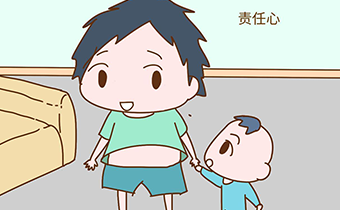
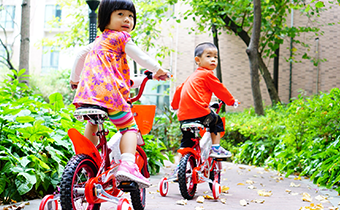
What is the reason why children don’t resist when their toys are robbed? Is it a good thing that a child doesn’t know how to resist when his toys are robbed? Faced with this situation, how should parents guide us? When several children play together, a toy-grabbing war will start in minutes - either they take a fancy to which child's toy they are playing with and snatch it! Or you take my toy? No! I have to snatch it back! Therefore, many mothers are very distressed about this and think that it would be better if their children did not snatch the toys. But in fact, if your child does not grab the toy, or even resists when the toy is robbed, you may also be depressed. Xiao Lin's family has a 1-year-old and 4-month-old boy. She sent a private message to Dong's mother: "My baby is 1-year-old and 4-month old. Every time I take him out to play, other children snatch his toys. He may still be playing. When other children come and take away his toys, he just stands there blankly, not knowing how to resist or cry. When someone has had enough and stops playing, he will take the lonely toy back and continue to play. Is he cowardly?" Similar to Xiao Lin, a friend also had similar troubles: My friend's Duoduo is 2 years old and is usually very active at home. But once I went to play in the community, it became very quiet. For example, when playing on a slide, he is unwilling to go up as long as there is someone on it, even a very small baby. I always wait and wait until no one is around before I go up and play by myself. If another child comes at this time, he will come down immediately. In the eyes of friends, this is a sign of Xiaoduo's lack of confidence. It can be seen that regarding the matter of "robbing" and "being robbed", whether it is the former or the latter, parents have endless worries! But having said that, if a child does not resist when a toy is robbed, is it really timid or lacks self-confidence? In fact, there are three main reasons why children do not snatch toys or resist: 1. Children are born with a gentle temperament. If a child wants to play with his toy, he will feel that since the other person wants to play, then let him play, it doesn't matter. Of course, there may not be many such children. Of course, if a child is born with a gentle personality, parents do not have to make him "strong" as long as the child feels comfortable with himself. 2. The child’s property rights awareness has not been formed. Compared with the child’s naturally gentle personality, the lack of “property rights awareness” is more likely to be the biggest reason why the child did not resist the toy being robbed. Generally speaking, children will enter a critical period in the development of self-awareness after 1 year old and nearly 2 years old. They will already have a preliminary concept of "mine", which is what we usually call "property rights awareness" begins to sprout. Before the awareness of property rights is formed, children do not have the concept of "mine". At this time, if he is suddenly robbed of something by others, he may be stunned because he does not know why others robbed my things, or he may not know how to deal with it. Moreover, since he is relatively young, his language skills are not yet perfect. Mothers should not be anxious about this, you know. Children's social development is a gradual process. What we as parents can do are some step-by-step methods. For example, first let the child have more contact and play with his friends to improve his communication experience, because children will pay attention to each other and even imitate actions when playing with toys. Generally, this happens around the age of two or after. When the child is about three years old, there will be a kind of cooperative and complementary and mutually beneficial behavior, such as exchanging toys or exchanging food. If the child just doesn't like playing with other children, parents should not force him, but can guide him slowly. Secondly, it is necessary to help children establish and improve their “property rights awareness” and make it clearChildren’s “concept of property rights”. When giving a child something, parents should tell the child: "This thing belongs to you, you have to take care of it yourself" or tell him: "This thing belongs to you, if others want to take it away, you need your permission." If a child snatches the child's toy in front of you, then what you need to do is not to encourage the child to snatch the toy back, but to help him establish the awareness of property rights that this thing is his. Yesterday, Dong’s mother took her children to play with the twist car in the community. Maybe because this car has music and it sounds good, an older child came over and wanted to play. My son is less than two years old, his language expression ability is not good, and his behavioral movements are not good enough. In addition, he got a little sick during this period, so he is also very thin. The older child came over and reached out to pull the car, so I held the car directly, and then said to the child in a gentle voice: "Kid, please wait a moment." Then I turned to my son and asked: "Baby, this car is yours, do you want to play with it now? Do you want to let this little brother play with it?" My son thought for a while, and then he changed from holding the handlebar with one hand to holding the handlebar with both hands. I told the child: "I'm sorry, kid, my brother is going to play for a while. I'll give it to you when he stops playing, okay?" Obviously, the boy was a little reluctant, but his mother came over and pulled him away. As for whether he is happy or how his mother comforts him, it is not within my scope of consideration. As a mother, the first thing I should consider is my own son’s feelings. 3. Parents have a strict attitude. Some people do not dare to resist or refuse when their toys are robbed. It may also be the reason of their parents. Some parents are more face-conscious and think it is just a toy. If the other person likes it, let him play first. There is no need to rob him. If he robs the other person's child and makes him cry, it will make him very embarrassed. Therefore, once the child wants to snatch the toy back, such parents will scold the child for being "ignorant." And it is precisely because parents are too strict with their children that they will not dare to resist when their toys are robbed. If this is the case, what we as parents need to do is to let the children express their true emotions bravely: If someone else takes away the child's toy and the child cries, what the parents should do is not to say "Don't cry" or "Why are you so stingy?" but they should first ask the child: "What do you think? Are you unwilling to give this toy to the children?" And if the child's toy has been taken away, we can also ask: "Do you need us to get the toy back together?" or "What do you want mom to do?" In this case, what parents actually need to do is to use this method to make the children feel the strength and support from their parents. Only then will the children speak out their thoughts boldly when faced with toys being robbed. Therefore, if a child does not dare to resist when a toy is robbed, parents do not need to worry too much, and do not label the child as "good" or "timid". At the same time, we should also be careful not to be too serious or harsh with our children, and let them have the courage to express their thoughts or anger.

The Rise of Sustainable Manufa
Explore how sustainable manufa...(198 ) viewsTime:2026-07-09
Exciting Performances Await at
Join us for the thrilling open...(173 ) viewsTime:2026-07-09
Export 101: Essential Tips for
Discover essential tips for fi...(195 ) viewsTime:2026-07-09
Top Trends in Wholesale Trade:
Discover the latest trends in ...(42 ) viewsTime:2026-07-09